Thursday, 26 February 2015

Pub Quiz

This week I’ve been to a pub quiz.

My girlfriend had been telling me about this pub quiz for months. “It’s great, Ryan. You go in and the first round is a picture round. It’s likely this week’s one will be about the Oscars. You’ll be good at that- you know your films. Then they’ll be some general knowledge questions. They have a break in the middle where they give out Pulled Pork rolls. The meat is exquisite. But the rolls are something else. A good roll can really elevate a sandwich can’t it? Take it from being food and transpose it into art. Don’t you think? Then, there’s the music round. They play 10 seconds from a tune and you have to guess what it is. You’ll be good at that, Ry. After, we’re back to questions on current affairs, so revise Today and Newsbeat this week. Cover both stations, Ry. We have to be political and populist if we want to take home the prize. The biggest mistake people make is to think reading the broadsheets is enough. They forget that it’s General Knowledge, not Question Time. I mean we’re not trying to negotiate a ceasefire in Donetsk; we’re trying to win a meal in a pub. It’s a nice quiz though, Ry. All the money raised goes to a charity. So we can feel doubly good when we win.”


Now I was excited.
The pub quiz I usually attend has no such variety. The quiz is read by a listless Scotsman, who doesn’t so much present the questions but filibusters them. His pace so stately he could profit by offering tours around it. He reads the fifty questions, one after the after, with an enthusiasm that suggests he’s doing it against his will. My theory about him is this: I’m guessing that following a charisma bypass he's been on long-term sick. Subsequently Atos, the disability OFSTED, have come along and declared him fit for work. Hence, his position as weekly quizmaster. Alas, a man who has had his personality removed is now forced to perform a role that requires one. Another victim of the Coalition’s attack on the unemployed.


I arrived at the quiz with my girlfriend. I was going to be on a team with her family. Now this brings pressure. You don’t want to appear too smart and too much of a know-it-all. Because let’s face it: pub quizzes are socialist only on the surface. They’re quasi-co-operative. In reality everyone’s acting out of self-interest, praying their intelligence holds up. So if you answer all the questions and single-handedly secure your team a meal voucher, don’t expect to be invited to that meal. Expect to be exiled and not invited to your own wedding. Likewise, you don’t want to get too many questions wrong. That will make the parents think their daughter has gone into the dating bookies and backed a dumb horse.


It is for that reason – and that reason alone – why I was so mediocre in the pub quiz. I couldn’t have been more mediocre if I tried. After unraveling William Pitt The Younger from the Prime Minister’s anagram round, I was worried that I was going to look too smart. So from then on – intentionally – I answered a few questions wrong. To an onlooker, I would have looked like a simpleton. Like a six foot waste of university education. In reality, I was playing the fool. I mean who in their right mind would answer the question, "Complete the famous phrase: ‘All roads lead to …" with the answer "the motorway."


 Imagine saying that seriously in front of prospective in-laws.


Friday, 20 February 2015

Birdman

This week I’ve been watching Birdman.


Birdman is a story about the challenges of leaving your past behind. The film features Michael Keaton as Riggan Thomson, a washed-up Hollywood actor known for playing the comic book hero, Birdman. Determined to revitalise his stalled career, he turns polymath: financing, directing and starring in a theatre adaptation of a Raymond Carver short story. In leaving Hollywood for Broadway, he hopes the industry will view him as an artist rather than a product.


Alejandro González Iñárritu’s film has been dismissed in some quarters as an in-joke that only the film industry will enjoy, but I feel the issues are universal. We have all been in jobs that we’ve done for money rather than love. Every day people find themselves in work that succeeds in keeping them fed, but fails in feeding their curiosity. Every day people look out of the window and dream they were someplace else. Birdman looks at desire and asks: what happens if a caged bird doesn’t just sing but tries to break free? Would it enjoy flying into the unknown? Or long to retreat back to its gilded prison? Riggan’s move from LA to New York could be applied to any person’s career change and the
exhilarating fear that accompanies it.


Riggan’s fear is made manifest in the film by the character of Birdman. Birdman is Riggan’s mainstream alter-ego, a Tyler Durden phantom, that mocks him for choosing to pursue a path of credibility rather than fame. It sits with him in the dressing room, chastising him on his artistic endeavor; follows him home, reminding him about the glory he could reclaim. It’s an albatross that he just can’t shake. More importantly, the character is rich in lovely symbolism, giving literature twats like myself, a chance to splash around in Iñárritu’s metaphorical ball pool. 


The cinematography deserves mentioning too. Being set mainly in the tight corridors and compact dressing rooms of a theatre, and documenting the intense internal and external struggle of putting on a new play, it was necessary to find a style that exacerbated the mental and physical claustrophobia. Therefore Iñárritu shoots the film close up, using hand-held cameras, which removes the sheen of cinema and exposes the grit of Riggan’s labour. More than this, the film appears like it was done in one take. When you watch the film, the cuts aren’t evident; the transitions seamless.


The other performances are universally great. Edward Norton is outstanding as a method actor who has supreme confidence on stage but terrible doubts off it. Emma Stone as Riggan’s daughter is revelatory. I really liked Stone’s lead debut in teenage flick, Easy A; there she was vivacious and intelligent. The same is evident here: playing a recovering drug addict, she burns like a Kerouac candle.

On Oscar night, I’m hoping Boyhood wins ‘Best Film’- a twelve-year project that documents a boy’s life from childhood to adulthood. But if Birdman swoops in and flies off with the prize, I'll flap around the living room and do my best celebratory squawk. 


Friday, 13 February 2015

Serial

This week I’ve been listening to the Serial Podcast.

Around Christmas I arranged to go and watch a comedy podcast recording with my mates, Andy and James. We met in a pub beforehand and like the seasonal pudding doused ourselves in alcohol. On leaving the pub I found the world wasn’t how I had left it. The furniture was askew but I didn’t have the co-ordination to rearrange it. I couldn’t see straight. Let alone think straight. Therefore, my memory of that evening is limited. The only thing I remember is the comedian Carl Donnelly saying how great a podcast Serial was.

The next morning I downloaded it and last week I began listening. Serial isn’t like any podcast I have heard before. It is - excuse the sales pitch- a box set you can listen to in the car. The show is divided into twelve episodes, ranging from half an hour to an hour in length, telling the true story of the death of Hae Min Lee, a senior at Woodlawn High School in Baltimore County, Maryland. 

Hae Min Lee
Disappearing on January 13th 1999, her body was recovered three weeks later in a park. Following an investigation, her ex-boyfriend Adnan Syed was arrested and charged with murder via strangulation. Although no physical evidence was found tying Adnan to the crime scene, Adnan’s friend Jay testified against him, admitting he helped Adnan move and bury the body. Case closed.

Adnan Syed


Fifteen years later, Sarah Koenig, a journalist for the Baltimore Sun, receives a phone call from a friend of Adnan’s asking her to review the case. You see Jay might not have been as reliable a witness as he seemed. Further Adnan’s lawyer might have missed details – deliberately? – that could have kept him out of jail. So over the course of the twelve episodes, Koenig reviews every aspect of the case. Her handling of evidence is masterful: we hear taped recordings from the interrogation room, the examinations in court, interviews with friends and family, along with Koenig’s own narrative and suppositions. 

Detractors could argue that the podcast is no better than a Jack the Ripper murder tour, turning something harrowing into entertainment, but that would be unfair. Koenig’s reporting won’t appeal to those who have a tabloid fascination for murder; instead it will appeal to sticklers interested in the investigative process.

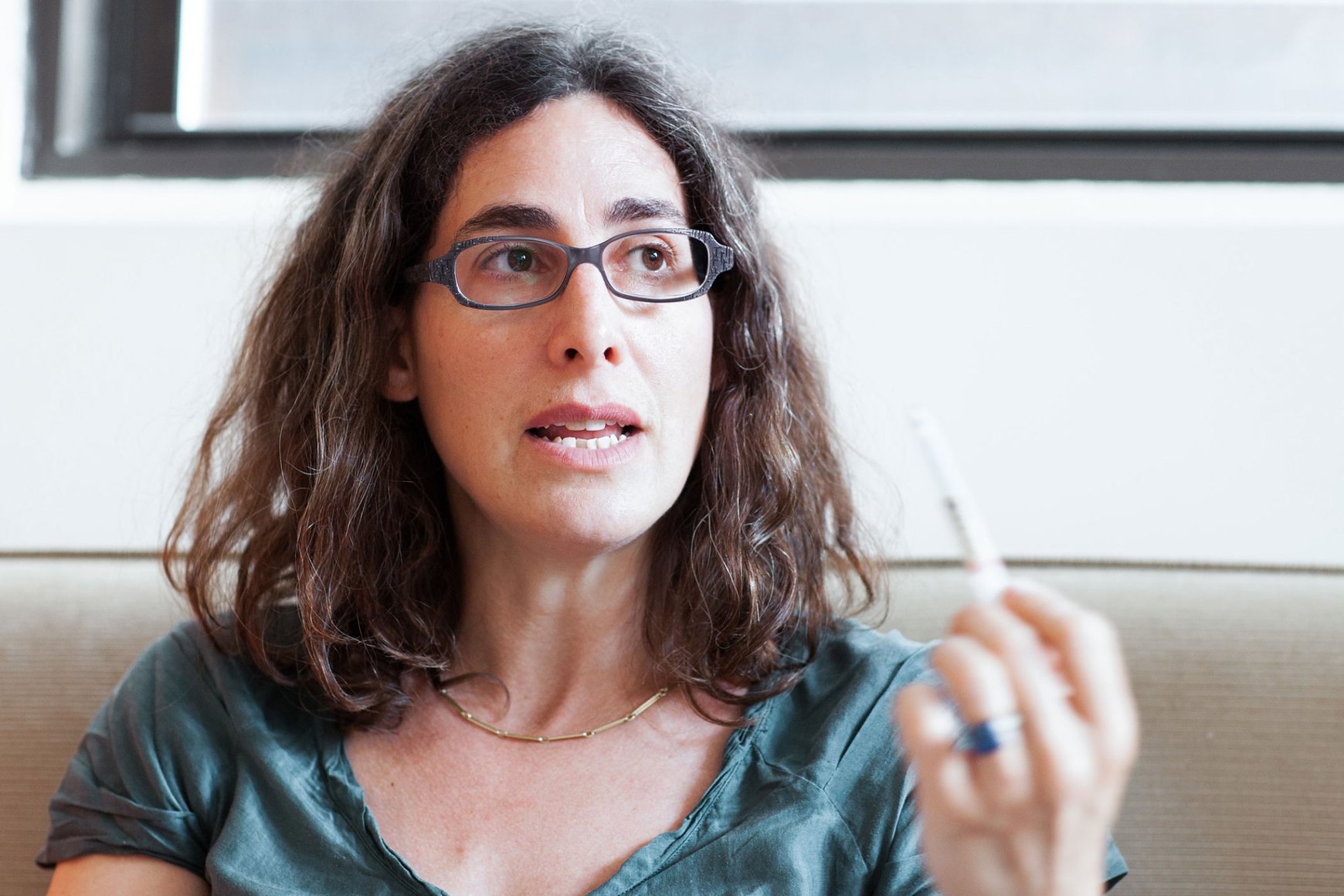
Sarah Koenig

Perhaps the most enlightening element of the show is Koenig’s interviews with Adnan. Incarcerated in prison, Adnan speaks passionately about his innocence, but wisely about the mistakes he made in his life. It is these interactions that make the programme so compelling. It is clear Adnan’s charm disarms Koenig, making her question her own objectivity: can she view the case dispassionately if she likes Adnan?

I listened to the shows on my way to work over the last week. Yesterday I finished the last one. The closest thing I can liken it to is Homicide, a book by The Wire creator and former journalist David Simon. That book walked readers through murders from discovering the body to closing the cell door. This podcast goes a bit further and asks: what happens if the door slammed on the wrong guy? 

It’s a question I’m still asking.

You can download the podcast here: https://itunes.apple.com/gb/podcast/serial/id917918570?mt=2

Friday, 6 February 2015

Catastrophe

This week I’ve been watching Catastrophe.

Catastrophe is a new Channel 4 sitcom written by Rob Delaney and Sharon Horgan. For such a fresh, spirited comedy it is perhaps apt that the two writers met on new media. Delaney was recommended to Horgan by Father Ted creator Graham Linehan, and their shared enjoyment of one another’s inappropriateness led to a friendship, which in turn flourished into a writing partnership.

The coming together of these two comic minds is a marriage made in heaven. Or hell. Depending on how sensitive your sensibilities. Horgan, you get the feeling, is the one pulling the strings. She has previous in sitcoms, writing the criminally under-rated Pulling and the prison comedy, Dead Boss. Delaney has no such experience: he became famous through Twitter (he has 1.4 million followers) and has taken that online audience into the theatres where he regularly performs stand-up. Having viewed Delaney’s Twitter Feed and stand-up, I think he’s much better at the former. His freewheeling, scattergun, man-child barbs are hilarious online but diluted by the necessary narrative required for hour-long stand-up shows. Therefore, you get the feeling that it’s Horgan steering the thing, laughing at Delaney the naughty boy in the backseat.

            
 It should be said the show isn’t entirely original. Catastrophe doesn’t re-invent the wheel. Its premise has already been done by Judd Apatow in Knocked Up: strangers have inconsequential sex and as a consequence find out they’re pregnant. What the show does have is a great voice: think a dirty threesome between the warts-and-all romanticism of Him and Her; the verbal skirmish of When Harry Met Sally; and the inventive invective of The Thick of It.
       
Episode three aired this week and the opening exchange between Rob and Sharon (the characters share the creators names) perfectly captures how the poetic and profane meld to form a comedy with heart, balls and vagina.
Here’s the couple discussing the need to get their finances in order:

Sharon: (sits up in bed frightened) Have you got life insurance?
Rob: (tired, unimpressed with being woken) I’ll get some. We’ll get you life insurance too.
Sharon: Not too big a policy for me though. I don’t want you to murder me to get the money.
Rob: (straight-faced) I’m not going to murder you. When women get murdered it’s like 85% of the time the husband’s done it. The cops would totally know that it was me. Even if I wanted to kill you I wouldn’t kill you. Or have you killed.
Sharon: (smiling at this joke) I wouldn’t kill you either.
Rob: (smiles and turns back to sleep) Thanks honey.

            
There’s not many couples that talk murder before bed, but that’s what makes Rob and Sharon so appealing: life for them is a joke. Now with a baby on the way they’re having to think seriously. Seeing these intelligent buffoons fall in love and support one another is a genuine tv highlight and one I would recommend.     

Catastrophe is now up to episode four. Previous episodes can be found here: